

Business Operation · 2025
In this section24 topics
- Corporate Information4 items
- Dividend Policy2 items
- Major Shareholders2 items
- Business Strategies Overview5 items
- Material Changes & Developments1 item
- Use of Proceeds from Securities Offerings2 items
- Commitments Made in the Registration Statement1 item
- Group Operating-Structure Policy1 item
- Companies Where the Company Holds ≥10%1 item
- Shareholders with Potential Conflict of Interest1 item
- Relationships Among Major Shareholders1 item
- Shareholders' Agreement1 item
- Shareholding Diagram (Group Structure)2 items
- Income Structure3 items
- Product / Service Characteristics2 items
- Research & Development6 items
- Assets Used in the Business5 items
- Marketing Policy & Competition2 items
- Procurement of Products & Services6 items
- Nature of Business — Overview1 item
- Product Information — Overview1 item
- Projects Under Construction1 item
- Debentures & Bills of Exchange1 item
- Convertible Securities1 item
Corporate Information
Company Name
Bangkok Lab and Cosmetic Public Company Limited
Telephone
0-3271-9900
Website
www.blcplc.com
ir@blcplc.com
Dividend Policy
Dividend Policy
The Group have a policy to distribute dividends to shareholders at a rate not less than 40% of net profits from the financial statements specific to business operations, after deducting corporate income tax and allocating reserves according to laws and regulations and the Company’s and subsidiary’s regulations. However, the distribution of such dividends may be subject to change. This will be evaluated based on operational performance, investment plans, financial status, liquidity, business expansion plans, the necessity of using working capital for management and the expansion of the Company’s and subsidiaries’ businesses. Additionally, economic conditions and other relevant considerations, including the future management of the Company and subsidiaries, will be considered.
Historical Dividend Payments
| This Year | Last Year | 2 Years Ago | 3 Years Ago | Metric | Description | Remark |
|---|---|---|---|---|---|---|
| 0.31 | 0.26 | 0.19 | 0.26 | Net profit per share (Baht : Share) | Net profit per share (baht : share) | In 2025, The right to receive a dividend is uncertain because it has not been approved by the Shareholders' Meeting |
| 0.25 | 0.15 | 0.1 | 0.21 | Dividend per share (Baht : Share) | Dividend per share (baht : share) | |
| 0 | 0 | 0 | 0 | Dividend stock ratio (Number of original shares: dividend shares) | Ratio of stock dividend payment (existing share : stock dividend) | |
| 0 | 0 | 0 | 0 | Dividend share value per share (Baht : Share) | Value of stock dividend per share (baht : share) | |
| 0.25 | 0.15 | 0.1 | 0.21 | Total dividend payment value (Baht : Share) | Total dividend payment (baht : share) | |
| 80.95 | 56.92 | 56.89 | 89.33 | Dividend payout ratio to net profit (%) | Dividend payout ratio compared to net profit (%) |
Business Strategies Overview
Chairman's Message
The year 2025 was another challenging year for both the Thai and global economies, characterized by limited economic expansion, cost volatility, and uncertainties from external factors. Nevertheless, Bangkok Lab and Cosmetic Public Company Limited (BLC) continued to generate consistent revenue growth. This reflects the resilience of the pharmaceutical and healthcare products industry, as well as the Company’s business potential to adapt and thrive even in a challenging environment.
The Group remains committed to operating under our corporate purpose: “Trusted Solutions for Lifelong Well-being.” We are dedicated to developing and delivering high-quality, safe, and accessible healthcare products to meet the public's growing health demands. This is particularly vital within the aging society, which is a crucial long-term demographic structure in Thailand.
The Board of Directors places great importance on good corporate governance, transparent business operations, and the equitable treatment of all stakeholders, coupled with prudent risk management, to foster stable and sustainable growth across economic, social, and environmental dimensions.
In 2026, the Group expects a significant strategic milestone as our new manufacturing plant funded through the Initial Public Offering is set for completion and will become operational during the second half of the year. This represents a major leap forward for the Group in expanding production capacity, enhancing business agility, and accommodating future growth opportunities for both existing portfolios and new product developments.
On behalf of the Board of Directors, I would like to express my sincere gratitude to our shareholders, investors, business partners, and all stakeholders for your continued confidence and trust in BLC. I also extend my heartfelt appreciation to the management team and all employees for their dedication and unwavering efforts in driving the organization forward. BLC remains steadfast in conducting our business with responsibility and prudence, aiming to create sustainable value for the long-term growth of both the Company and society.
Asst. Prof. Dr. Mr. Wanchai Sutananta
Chairman (Independent Director)
Vision
To be a leader in innovative thinking, fostering ethical business practices, integrating Thai wisdom and creating benefits for consumers.
Objectives
The Company's purpose of " Trusted solutions for Lifelong Well-being" which will provide answers to all consumers to have good health and be safe from diseases that are increasing in today's aging society. The company is determined to create good quality health products for society and increase access to quality health products to meet these needs.
Goals
Promote innovation and implement standardized management systems in various areas to develop high-quality and safe products.
Promote the use of technology in work processes to improve operating efficiency.
Conduct business in compliance with legal requirements, customer needs, and social responsibilities, while minimizing environmental impact
Business Strategies
The group has developed a strategy from 2025 to 2029, which is a growth strategy, with revenue growing from 7 companies in 7 distribution channels and 7 product groups.
Growth from product groups is divided into 2 main groups: 1) drug group, consisting of generic drugs, herbal medicines, economic drugs, 2) non-drug group, consisting of food supplements, cosmetics, pet products, medical devices and others. The revenue growth (1) will focus on increasing sales from the existing customer base by existing products by restructuring the sales team to support in-depth work and cover customer groups and can increase the number of stores, hospitals, clinics and pharmacies (2) Increase sales from the existing customer base from new products by introducing new products to build on existing brands to increase choices for consumers (3) Increase sales from a new customer base from existing products. The company has established BKD Viva Company Limited to help increase sales in e-commerce channels, expand markets abroad and have contract manufacturing (4) There is an extension from generic drugs to biologics, which is considered a high potential future market, including starting to have product products that reach the pet market.
Material Changes & Developments
Material Changes & Developments
| Year | Description |
|---|---|
| 2,024 |
|
| 2,023 |
|
| 2,025 |
|
Use of Proceeds from Securities Offerings
Is There Money Raised from a Securities Offering Still to Report On?
Yes
Offerings
| Type of Securities | Amount Raised Given As | Amount Raised (Million Baht) | Uses of the Money | Used as Declared? | Progress / Reasons and Measures if Not Used as Declared | Related Link |
|---|---|---|---|---|---|---|
| Equity Instruments | 2873 | 1,199.5 | 2025-12 · Objective: To invest in future projects · Period type: 2871 · Start period: 2025-12 · Spent amount type: 2873 · Start spent amount: 826.44 · Expected amount type: 2873 · Start expected amount range: 885.0 · 2025-06 · Objective: To repay loans borrowed from financial institutions · Period type: 2871 · Start period: 2025-06 · Spent amount type: 2873 · Start spent amount: 100.0 · Expected amount type: 2873 · Start expected amount range: 100.0 · 2025-06 · Objective: To use as working capital · Period type: 2871 · Start period: 2025-06 · Spent amount type: 2873 · Start spent amount: 214.5 · Expected amount type: 2873 · Start expected amount range: 214.5 | Y | The Company aims to utilize the funds raised from this securities offering, approximately 1,260.00 million Baht (before deducting expenses related to the securities offering) or approximately 1,199.50 million Baht (after deducting such expenses), for specific purposes as outlined in the offering prospectus. These purposes include (1) investing in future projects amounting to 985.00 million Baht, (2) repaying outstanding loans from financial institutions totaling 100.00 million Baht, and (3) using funds as working capital amounting to 114.50 million Baht. The Company subsequently announced a non-significant change to the objectives for utilizing these IPO proceeds, which was disclosed on August 14, 2023, and reported to the 2024 Annual General Meeting of Shareholders on April 1, 2024. The revised allocation of funds is as follows: (1) investing in future projects amounting to 885.00 million Baht, (2) repaying outstanding loans from financial institutions totaling 100.00 million Baht, and (3) using funds as working capital amounting to 214.50 million Baht. | https://www.set.or.th/en/market/news-and-alert/newsdetails?id=100787200&symbol=BLC |
Commitments Made in the Registration Statement
Are There Commitments or Conditions from an Offering or Listing?
No
Group Operating-Structure Policy
Description
Bangkok Lab and Cosmetic Public Company Limited is a fully integrated health product enterprise. Our operations span from research and development through the BLC Research Center to the manufacturing of pharmaceuticals and health products at the BLC factory. We produce for six subsidiary companies under the Group’s own trademarks, as well as providing Original Equipment Manufacturer (OEM) services for external companies and business owners looking to develop their own brands.
Companies Where the Company Holds ≥10%
Companies (≥10% Holding)
| Company Name | Address | Province | Zip Code | Telephone | Fax | Business Type | Security Type | Shares | Paid-up Shares |
|---|---|---|---|---|---|---|---|---|---|
| Bangkok Drug Co.,Ltd | 874 Rama 6 Soi 23, Rama 6 Rd., Rajthevee | Bangkok | 10400 | 026139758-9 | 022192726 | Selling modern pharmaceutical products, including both generic and new generic drugs. The product categories emphasize pain relievers, musculoskeletal and joint medications, dermatological medications, etc. Additionally, it distributes herbal medicine products and nutritional supplements. | Common shares | 9,999,000 | 10,000,000 |
| Pharma Alliance Co.,Ltd. | 874, Soi Uruphong 2, Rama 6 Road, Thanon Phetchaburi Sub-district, Ratchathewi District | Bangkok | 10400 | 026139758 - 9 | Engaging in business operations that provide services for inventory management, procurement systems, accounting and finance systems, information technology systems, and transportation systems to the Company group. It also conducts activities related to international partner sourcing and export. | Common shares | 39,996,000 | 40,000,000 |
Income Structure
Product / Service Income
| Category | Description | This Year | This Year % | Last Year | Last Year % | 2 Years Ago | 2 Years Ago % |
|---|---|---|---|---|---|---|---|
| Total revenue from operations | Total revenue from operations | 1,667,493 | 100 | 1,557,044 | 100 | 1,406,184 | 100 |
| Generic Drugs and New Generic Drugs | 1,232,516 | 73.91 | 1,183,093 | 75.98 | 1,075,461 | 76.48 | |
| Cosmeceutical | 189,388 | 11.36 | 143,377 | 9.21 | 142,868 | 10.16 | |
| Herbal Medicine | 138,972 | 8.34 | 136,894 | 8.79 | 106,426 | 7.57 | |
| Food Supplement | 66,677 | 4 | 53,663 | 3.45 | 49,127 | 3.49 | |
| Animal Products | 6,234 | 0.37 | 10,696 | 0.69 | 7,574 | 0.54 | |
| Other | Other | 33,706 | 2.02 | 29,321 | 1.88 | 24,728 | 1.76 |
Export Income
| Category | Description | This Year | This Year % | Last Year | Last Year % | 2 Years Ago | 2 Years Ago % |
|---|---|---|---|---|---|---|---|
| Total revenue | Total revenue from operations | 1,667,493 | 100 | 1,557,044 | 100 | 1,406,184 | 100 |
| Domestic | Domestic | 1,593,822 | 95.58 | 1,463,691 | 94 | 1,309,843 | 93.15 |
| International | International | 73,671 | 4.42 | 93,353 | 6 | 96,341 | 6.85 |
| Laos | Laos | 31,425 | 42.66 | 38,442 | 41.18 | 28,802 | 29.9 |
| Cambodia | Cambodia | 18,141 | 24.62 | 19,670 | 21.07 | 19,502 | 20.24 |
| Hong Kong | Hong Kong | 9,331 | 12.67 | 14,777 | 15.83 | 27,330 | 28.37 |
| Vietnam | Vietnam | 8,031 | 10.9 | 7,749 | 8.3 | 6,868 | 7.13 |
| Other countries | Other countries | 6,743 | 9.15 | 12,715 | 13.62 | 13,839 | 14.36 |
Other Income
| Operating Other Income | Non-Operating Other Income | Share of Profit |
|---|---|---|
| 1710 · As of year: 11107.0 · Description: Total other income · As of yesteryear: 21942.0 · As of year before yesteryear: 10990.0 · 1711 · As of year: 11107.0 · Description: Other income from operations · As of yesteryear: 21942.0 · As of year before yesteryear: 10990.0 | 1712 · As of year: 0.0 · Description: Other income not from operations · As of yesteryear: 0.0 · As of year before yesteryear: 0.0 | 1713 · Description: Share of profit |
Product / Service Characteristics
Business Type
3114
Business Groups
| Business Group | Description |
|---|---|
| Generic Drugs and New Generic Drugs | The pharmaceutical products manufactured and distributed by the Group consist of generic drugs and new generic drugs. These products contain the same active ingredients as Original or Patented Drugs that have already reached patent expiration. The Group produces these generic drugs and new generic drugs. under its own trademarks, utilizing the same active ingredients as the innovator drugs. These are available in various dosage forms, including tablets, capsules, powders, liquids, creams, and gels. The Group’s pharmaceutical portfolio covers diverse therapeutic areas, such as Musculoskeletal system, Dermatological, Gastrointestinal system, Respiratory system, Anti-infectives, Analgesics (Pain relief), Blood and blood-forming organs, Urinary system, Nervous system, and Anti-parasitic drugs, among others. |
| Herbal Medicines | Medicines produced using herbal extracts sourced locally under the Group’s trademarks—such as Chili, Plai, Black Galingale, Aloe Vera, and Fah Talai Jone—utilize the accumulated knowledge of the Group to create treatments for consumers in alternative medicine. The Group manufactures and distributes herbal products in the forms of tablets, capsules, powders, liquids, creams, and gels. These herbal products include groups such as musculoskeletal system drugs, among others. |
| Animal Products | The Group manufactures and distributes a comprehensive range of animal health products, covering both livestock pharmaceuticals and pet care products under the Group’s trademarks. The livestock product group includes treatments for swine, poultry, dairy cows, and aquaculture, aimed at preventing and treating infectious diseases within livestock farming systems. At the same time, the Group also develops pet products, such as cat treats and pet beauty care products, to meet the needs of the continuously growing pet market. |
| Cosmetics | The Group manufactures and distributes cosmetics under its own trademarks for facial and body care in various forms, such as creams, ointments, and gels. In addition, the Company provides Original Equipment Manufacturer (OEM) services for external companies or business owners looking to develop their own products. |
| Food Supplement | The Group manufactures and distributes dietary supplements under the Group’s trademarks related to joint, muscle, bone, and eye care in various forms, such as tablets and powders. |
| Medical devices and others | Medical devices and other products manufactured and distributed by the Group include silicone scar gels, medical lubricants, mosquito repellent sprays, and wound care supplies, among others. |
Research & Development
Has R&D Policy (Y/N)
Yes
R&D Cost — Description
The Company conducts information sourcing for new product research, such as surveying related product markets, to use the data for researching and innovating new product designs that meet market demands. This includes coordinating with customers to inquire about researched product information, among other activities, to establish an annual research and development plan. Subsequently, the Research Department performs analysis, researches and develops production formulas, conducts trial production, verifies various quality aspects, and performs human bioequivalence studies before product registration.
R&D Cost — Label
Research and development (R&D) expenses over the past 3 years (Million Baht)
R&D Cost — This Year
8.6
R&D Cost — Last Year
10.49
R&D Cost — 2 Years Ago
5.9
Assets Used in the Business
Permanent Assets — Description
The Group's fixed assets used in its business operations, which include land, buildings and building improvement, as well as machinery and equipment, had a total net book value of Baht 1,093.13 million as at December 31, 2025. The details are as follows:
Permanent Assets — Appraisal
| Asset | Ownership | Obligation | Appraisal Value |
|---|---|---|---|
| Land | Owned | Mortgaged as collateral to a commercial bank | 98,834,730 |
| Buildings and building improvements | Owned | Mortgaged as collateral to a commercial bank | 106,014,668 |
| Electrical and groundwater systems | Owned | - | 57,696,457 |
| Machinery and equipment | Owned | - | 113,594,913 |
| Furniture, fixtures and office equipment | Owned | - | 14,280,926 |
| Vehicles | Owned | - | 1,453,568 |
| Assets under construction and installation | Owned | - | 701,249,975 |
Intangible Assets — Description
The Group's intangible assets consist of royalty fees, software licenses, and product development costs for medicine formulations currently under development and awaiting registration. As at December 31, 2025, the net book value recorded was Baht 19.83 million. Additionally, the Group has registered approximately 400 trademarks with the Department of Intellectual Property.
Has Subsidiaries Investment Policy (Y/N)
Yes
Subsidiaries Investment Policy — Description
The Company has an investment policy in subsidiaries and associated companies that aligns with the Company's goals, vision, and growth strategies, serving as an important guideline for supervising the operations of subsidiaries and associated companies. This will lead to increased performance or profits for the Company, enhancing stability or investing in businesses that provide synergy with the Company. Furthermore, the Company, its subsidiaries, and/or associated companies may consider investing in other businesses if such businesses have growth potential or can extend existing businesses, or are beneficial to the Group's businesses, and can generate good returns on investment. The Company will consider the investment proportion, expected profits, potential risks, and the Company's financial status, including analyzing the feasibility of the investment and assessing its potential, before making decisions on various projects. The approval for such investments must be considered by the Board of Directors' meeting and/or the Shareholders' meeting (as the case may be). The request for approval of such investments must comply with public company laws, securities and exchange laws, as well as announcements, regulations, and various criteria related to the Capital Market Supervisory Board, the Securities and Exchange Commission, and the Stock Exchange of Thailand, which includes criteria regarding the acquisition or disposition of assets, connected transactions, and information disclosure.
Marketing Policy & Competition
Reporting Mode
3116
Per-Business-Group Breakdown
| Marketing Policy | Industry & Competition |
|---|---|
The Company focuses on producing generic drugs and new generic drugs of international quality standards. This commitment begins with selecting active pharmaceutical ingredients (APIs) from reliable sources, implementing quality control and assurance at every production stage, and conducting analytical testing, as well as performing bioequivalence studies for new generic drugs. The overall process, from research and development to successful product registration, takes approximately 3–4 years to ensure consumers can trust that the Company's generic and new generic products are as effective as the original drugs. Furthermore, several of the Company's generic and new generic products have been accepted into university hospital formularies before expanding to various healthcare facilities, including leading hospitals, clinics, and pharmacies nationwide. Typically, new generic drugs have a product life cycle ranging from 4–5 years to more than 10 years, depending on the drug type, market conditions, competition, replacement by newer drugs, and emerging medical technologies. Being among the first new generics to enter the market offers a product that is more affordable than imported drugs but with similar efficacy, resulting in relatively high profit margins during the initial market entry. Subsequently, small and medium-sized manufacturers may produce similar generics with varying quality to compete on price, which reduces the profit margins for those specific drugs. Generic and new generic pharmaceuticals play a crucial role in significantly increasing patient access to medicine. They assist the government in incorporating drugs into Thailand's healthcare reimbursement system, thereby saving the national drug budget and sustainably improving the quality of life for patients. | Production and Sales SituationAccording to an analysis by the Office of Industrial Economics (OIE), Thailand’s pharmaceutical production and sales volumes in the first nine months of 2025 slightly contracted by 0.2% YoY and 1.1% YoY, respectively. The primary driver was a slowdown in hospital patient visits, both Inpatient (IPD) and Outpatient (OPD). Notably, OPD visits declined significantly; having averaged between 300–340 million visits per year during 2022–2024, the figure is projected to fall below 300 million visits in 2025. This decline directly impacted the demand for medicine from the public health service sector, which remains the largest buyer in the system. The deceleration in patient numbers following the resolution of the COVID-19 pandemic is partly due to a decreased urgency for hospital visits. Furthermore, weakened household purchasing power has led to more cautious spending. As a result, patients with non-severe symptoms are delaying medical consultations or shifting toward self-medication and services from community pharmacies instead of hospitals. Additionally, hospitals have implemented stricter inventory management post-pandemic, causing order volumes for certain medications to drop slightly faster than the actual number of patients. Consequently, the reduction in patient traffic has directly affected hospital drug consumption, leading to a broader slowdown in pharmaceutical production and sales across the entire system. International Market SituationAccording to international trade statistics from the Ministry of Commerce, Thailand’s pharmaceutical import value during 2021–2024 showed a continuous decline from USD 3,614.5 million to USD 2,813.7 million, representing an average annual contraction of approximately 8.0%. Although the first 10 months of 2025 saw a recovery of 12.1% YoY, reaching USD 2,607.4 million, this level remains significantly lower than in previous years. This sustained contraction is partly due to a base effect adjustment following the COVID-19 pandemic, during which there was massive stockpiling and advanced ordering. Other contributing factors include stricter pharmaceutical budget controls and government policies encouraging public health agencies to prioritize generic and locally produced medicines to reduce public spending. Furthermore, weakened household purchasing power has prompted importers and hospitals to focus on cost-effectiveness, leading to a reduction in certain import values. Regarding the import structure in the first 10 months of 2025, Germany and the USA remained Thailand’s primary trading partners, accounting for 14.5% and 13.5% of total import value, respectively. Other key sources included India, France, Italy, Switzerland, Japan, South Korea, Ireland, and Denmark, reflecting Thailand’s continued reliance on a highly diverse group of developed nations for its medical supply. On the export side, Thailand’s pharmaceutical export value during 2021–2024 remained relatively stable within the range of USD 480–490 million, with a marginal average growth of only 0.2% per year. However, growth improved to 2.8% YoY in 2024 and continued to rise by 5.0% YoY in the first 10 months of 2025. Key export markets remain concentrated within ASEAN and neighboring Asian countries—specifically Myanmar, Vietnam, Cambodia, Hong Kong, Malaysia, Laos, and the Philippines—collectively accounting for approximately 70% of total exports. Overall, Thailand continues to face a significant trade deficit in the pharmaceutical sector, with import values exceeding exports by 5 to 6 times. This reflects an industry structure that is still heavily dependent on imported medicines and raw materials, while export potential remains limited to neighboring countries and generic products with relatively low added value. (Source: Land and Houses Bank PCL.) |
The Company has established the BLC Research Center to incorporate modern technology and innovations, along with conducting research and development to enhance the value of its products. This includes current generic medicines, generic drug types, new generic medicines, Thai herbal medicine products, medicine for livestock, cosmetics, nutritional supplements, and other products. The focus of the research and development is to create herbal medicine products as alternative treatments, complementing the current generic medicines, generic drug types and new generic medicines. The important steps involved in this process are as follows:
| Global herbal consumption value in 2021 was estimated at 54,957 million USD (approximately 1.81 trillion Baht). The top 5 countries with the highest herbal consumption value include China (17,039.9 million USD: 32% share), the United States (7,636.4 million USD: 14% share), Japan (4,628.6 million USD: 7% share), South Korea (2,965.7 million USD: 5% share), and Germany (2,155.8 million USD: 4% share). Meanwhile, Thailand ranked 8th with a value of 1,483.5 million USD, accounting for a 3% share. (Source: Euromonitor International) The Thai herbal industry is entering a significant period of growth, bolstered by the government’s proactive goal to drive it as one of the country’s new economic engines, coupled with the ongoing global wellness trend. This analysis evaluates the overall potential, direction, and opportunities within the Thai herbal industry. Government Support: The Main Driving Mechanism Toward a 100-Billion-Baht Vision The Thai government has clearly demonstrated its intent to upgrade the herbal industry, setting a target to increase the market value to 100,000 million Baht (approximately 2,800 million USD) within 5 years. This is achieved through the integration of cooperation between relevant ministries, including the Ministry of Public Health, the Ministry of Agriculture and Cooperatives, and the Ministry of Commerce, to promote herbal use in the healthcare system and drive commercialization. The National Herbal Policy Committee has approved clear budget support, increasing the specific budget for herbal medicines to 1,000 million Baht, with plans to increase it to 2,000 million Baht in the following year. This aims to strengthen the entire supply chain, from upstream (cultivation) to midstream (extraction and processing). A key strategy is the driving of the "Herb of the Year" flagship action plan for 2025–2027, which has selected three high-potential herbs Plai (Cassumunar Ginger), Krachai Dum (Black Ginger), and Kratom—to concretely generate economic value:
The Second National Master Plan on Herbal Development (2023–2027), if driven according to plan, will result in the production of standardized, high-quality herbs and create added value for herbal products. It aims to enhance confidence in herbal use and continuously and systematically improve competitiveness in both domestic and international markets.
The Department of Thai Traditional and Alternative Medicine, Ministry of Public Health, announced the "15 Herbal Champions" under the Second National Herbal Action Plan (2023–2027) to support herbal development throughout the value chain. This initiative sets a goal for these herbs to enter the global market and create economic value for the country. The herbs are divided into two groups: Group 1 consists of three herbs ready for further development, namely Turmeric, Andrographis, and Black Ginger. Group 2 consists of 12 high-potential herbs that require continuous development, namely Gotu Kola, Indian Gooseberry, Cassumunar Ginger, Ginger, Fingerroot, Aloe Vera, Pueraria Candollei (Kwao Krua Khao), Bitter Gourd, Cissus Quadrangularis, Kratom, Hemp, and Cannabis. (Source: Herbal Economics Division) |
The Company focuses on producing high-quality products for safe use, starting with research and development to ensure efficient, effective, and safe products for people, animals and the environment. The production of each product is registered with the Food and Drug Administration (FDA), and the manufacturing process complies with FDA standards. The Company carefully selects quality raw materials, conducts laboratory quality checks, and analyzes the products (Certificate of Analysis) to certify the quality standards of both raw materials and finished products. Additionally, the Company provides knowledge for proper veterinary use, and recommends appropriate withdrawal periods, ensuring the health of livestock is robust and free from residues in meat, milk, and eggs. Moreover, there is a commitment to fostering good relationships and collaboration with partners and customers to meet their needs, providing technical advice tailored to requirements, and leveraging expertise from past experiences to maximize benefits for customers and end consumers. | The animal pharmaceutical manufacturing industry, much like human pharmaceutical production, is regulated by the Food and Drug Administration (FDA). Every product must be registered, and the production processes must be strictly controlled to meet FDA standards, which significantly impacts production costs. Beyond these FDA production standards, quality also depends on the conscience of each individual manufacturer. In the case of Bangkok Medica Co., Ltd., working in collaboration with Bangkok Lab and Cosmetic Public Company Limited, before any product from Bangkok Medica Co., Ltd. is distributed and used in livestock farms, it must undergo years of research and development by Bangkok Lab and Cosmetic Public Company Limited. This is to confirm the efficacy and safety of the products for animals, humans, and the environment. Furthermore, the implementation of product usage programs is handled with expertise and responsibility, ensuring correct veterinary use with consideration for animal safety, product efficiency, and effectiveness. By strictly following proper withdrawal periods, livestock remain healthy and disease-free, ensuring no residues are left in meat, milk, or eggs. Consequently, consumers who consume these animal products remain safe. All of these reasons reflect the commitment of Bangkok Medica Co., Ltd. to collaborate with veterinarians in treating infectious diseases and ensuring the continuous healthy condition of livestock. (Source: Bangkok Lab and Cosmetic PCL.) Pet Food Industry The domestic pet food market value in 2025 is expected to grow by 12% compared to the previous year, driven by the increased demand for pet food following the rising number of pets. Areas with high growth potential include Bangkok and its vicinity, as they have the highest number of pets and owners with high purchasing power. Thailand’s pet food export value in 2025 is projected to grow by 15%, a slowdown from the 28.4% growth in the previous year. This is due to expected slower growth in demand from major trading markets, such as the United States, Italy, and Japan, which together account for more than 50% of the total export share. (Source: Kasikorn Research Center) |
The Company emphasizes the development of products with key elements, as follows:
| The overall cosmetic market value in 2025–2026 is projected to continuously expand at 13.2% YoY and 12.3% YoY, respectively. This is divided into the domestic market (79%) and the export market (21%). It is estimated that in 2025–2026, the domestic cosmetic market value will grow steadily at 13.3% YoY and 12.8% YoY, respectively, reaching levels higher than those before the COVID-19 crisis. Meanwhile, export value is expected to expand continuously at 12.8% YoY and 10.3% YoY, respectively. The main risk for the cosmetic retail business is the high level of competition. As the cosmetic market is large with high market value and ease of entry and exit, more entrepreneurs have entered the business. This is reflected by the number of entrepreneurs in 2024, which more than doubled from 2019, potentially leading to "price wars" that could impact the profitability of businesses. Furthermore, the industry faces other risks, including product obsolescence and issues stemming from rapid shifts in popularity (Fast Beauty). The domestic cosmetic market may face more severe penetration from Chinese cosmetics, especially through competition from online channels sold directly by Chinese sellers and manufacturers. This follows the eruption of the trade war between the United States and China, in which the U.S. imposed import tariffs on China starting in early 2025 totaling 145%, before temporarily reducing them to 30% for 90 days in mid-May 2025. Cosmetic Market Overview In 2025–2026, the overall value of the Thai cosmetic market is projected to continuously expand until it reaches levels higher than those before the COVID-19 crisis, with expected growth of 13.2% YoY and 12.3% YoY, respectively. This is benefited by the improving direction of the Thai economy and is further supported by the government’s short-term economic stimulus and tourism measures, such as the "Easy E-Receipt 2.0" project, as well as the recovering purchasing power of foreign tourists. Krungthai COMPASS estimates that in 2025–2026, the number of foreign tourists will reach 38.5 and 41.2 million people, respectively. Consequently, the domestic cosmetic market value, which accounts for approximately 79%, will grow steadily at 13.3% YoY and 12.8% YoY, respectively, surpassing pre-COVID levels. This aligns with the import value, which is projected to grow by 12.6% YoY and 12.1% YoY, respectively—an indicator reflecting domestic cosmetic market demand. Sales are divided into approximately 83% through offline channels and 17% through e-commerce. As for the export market, which accounts for about 21%, there is still an opportunity for continuous expansion because Thai cosmetics remain in high demand in international markets. Furthermore, the industry continues to benefit from tax advantages under FTA agreements with 18 countries, including ASEAN, China, Japan, Australia, New Zealand, Hong Kong, South Korea, India, Chile, and Peru. This enables entrepreneurs to further expand into international markets. It is estimated that cosmetic export value will grow by 12.8% YoY and 10.3% YoY, respectively, with major markets such as ASEAN, China, Japan, Australia, and India showing a continuous positive growth trend. (Source: Krungthai Bank PCL.) |
The Company’s dietary supplements are designed to be innovative, evidence-based, and safe for consumers. In the manufacturing process, quality control is implemented following the same standards as pharmaceutical production. This ensures that the products are of high quality, effective and safe. Ultimately, these supplements aim to efficiently repair and rejuvenate the body, contributing to the overall health of consumers. | Dietary supplements are products designed to enhance health, consumed in addition to regular daily meals. They are typically extracts from plants, animals, or synthetic enzymes that the body cannot produce on its own, processed into forms such as capsules or compressed tablets. Unlike most medicines, they do not have a direct effect on treating diseases but instead focus on properties such as improving excretion, nourishing the skin, weight loss, and brain enhancement. Dietary supplements are a product group within the pharmaceutical manufacturing industry that has shown prominent growth recently, especially following the COVID-19 pandemic. This outbreak shifted consumer behavior toward greater health consciousness and preventive healthcare, alongside an increased awareness of beauty and anti-aging across all genders and ages, serving as a key driver for the continuous growth trend in the dietary supplement market. In 2024, Thailand's pharmaceutical production volume stood at 35,848 tons, a decrease of 6.6% YoY. Over the past five years (2020–2024), the growth trend has also declined, as reflected by a Compound Annual Growth Rate (CAGR) contraction of 4.7%, consistent with the downward trend in sales and export volumes. This is partly because production efficiency cannot yet compete with rivals like India and China, coupled with the fact that certain key raw materials must rely on imports, which have been affected by rising material prices and exchange rate volatility. Regarding the market structure, Thailand’s pharmaceutical and dietary supplement industry primarily produces for domestic sale, accounting for 88.5%, while exports represent only 11.5%. Regarding the market value of dietary supplements in Thailand, in 2024 it stood at approximately 83,330 million Baht, with a continuous growth trend reflected by a Compound Annual Growth Rate (CAGR) of 8.2%. The key drivers include the preventive healthcare trend and convenient, extensive access to online channels, enabling brands with strong digital strategies to achieve prominent growth, particularly among working-age consumers and Generation Z. According to a 2022 survey by Kantar, the most purchased dietary supplements are holistic health products, such as multivitamins, ginseng extracts, and plant extracts (29% share), followed by skin and beauty products, such as collagen and L-glutathione (21%), protein supplements like whey protein (19%), immune boosters like Vitamin C and Zinc (8%), weight control products like fiber or meal replacements (7%), and other products such as those for vision, bone and joint health, brain enhancement, and sleep (16%), respectively. The Thai dietary supplement market is highly competitive, featuring leading brands such as Blackmores, manufactured by Blackmores (Australia) and imported by Blackmores (Thailand), and Mega We Care from Mega Lifesciences (Thailand), alongside various other brands imported from several countries. These brands compete by continuously developing and launching new products using similar sales strategies, such as referencing research-backed properties, employing credible presenters, or using famous influencers. Meanwhile, a segment of Thai entrepreneurs operates as original equipment/design manufacturers (OEMs/ODMs), such as Revomed (Thailand) and Derma Health (Thailand), which primarily produce dietary supplements under various brands for other companies. These manufacturers possess expertise, production technology, and certified factories, allowing them to meet the needs of new brand owners entering the market who lack production readiness. Additionally, Thailand imports health food products, particularly dietary supplements from renowned global brands. In 2024, the import of vitamins and dietary supplements was valued at 1,425.4 million USD, an increase of 1.4% YoY, which represents a slowdown compared to the high base of the previous year. Most imports originate from Germany (18.1% share), followed by France (10.0%) and the United States (8.1%), respectively. The Thai collagen market is a beauty and health product segment with a strong growth trend, with a market value of approximately 17,000 million Baht, accounting for about 20% of the total value of the Thai dietary supplement market. Collagen products are widely recognized for their properties in reducing wrinkles and increasing skin elasticity, as well as nourishing skin, hair, and nails. These are available in various forms, including cosmetic products, dietary supplements, and beverages. At the same time, collagen is used in dietary supplements to support health, such as bone and joint care or muscle enhancement, particularly among the elderly and fitness enthusiasts. The formats of collagen products available in Thailand have become increasingly diverse; while they were previously limited to tablets or capsules, they have now evolved into water-soluble powders, ready-to-drink (RTD) beverages, jellies, and other convenient formats. Specifically, RTD collagen products have gained high popularity among consumers seeking convenience and speed. Competition in the Thai collagen market is highly intense, with international brands from Japan, South Korea, and Europe vying for market share alongside Thai brands that develop high-quality products to compete with imports. Product prices vary widely from mass-market to premium levels, making them accessible to consumers at all levels. Popular marketing strategies include influencer marketing and the presentation of "Before-After" results, which highly influence purchasing decisions. A significant emerging trend in the Thai collagen market is the emphasis on the source and quality of raw materials. Consumers are increasingly paying attention to the specific type of collagen (Type I, II, III) and its source (bovine, porcine, poultry, or marine). There is a rising offering of collagen from sustainable and environmentally friendly sources, as well as plant-based collagen builders for vegetarian and vegan consumers. Furthermore, production innovations that enhance absorption and efficacy, such as hydrolyzation technology—which reduces collagen molecules for better absorption—are gaining interest from Thai manufacturers. Distribution channels for collagen in Thailand are diverse; online channels are growing rapidly through e-commerce platforms, social commerce, and brand websites. Meanwhile, offline channels remain important, particularly pharmacies, supermarkets, and convenience stores, which have begun dedicated shelf space specifically for beauty supplement products. (Source: Land and Houses Bank PCL.) |
In the area of marketing and advertising communications, the Group regularly conducts monthly training sessions to develop its sales personnel. These sessions focus on providing in-depth product knowledge as well as updating information related to the pharmaceutical industry to ensure it remains current. The objective is to enhance the expertise of the sales team in delivering accurate and up-to-date information to customers, particularly pharmacies and hospitals, thereby elevating the quality of product-related communication. In addition, the Group participates in various academic events and fitness centers to provide knowledge and understanding about the users of the Company’s products. The Group also continuously addresses inquiries and responds to questions to ensure clear and accurate information is communicated. | In 2025, domestic demand for medical devices is expected to continue growing, partly due to periodic outbreaks of COVID-19 surveillance diseases and air pollution-related illnesses. However, the export value of medical devices is likely to experience a slight contraction. Key markets, such as the United States, have implemented reciprocal tariffs, which have somewhat pressured the demand for Thai imports. Meanwhile, China has adjusted its policies to focus on domestic production over imports. For 2026 and 2027, the demand for medical devices is projected to grow at a similar rate to 2025 or show a slight improvement. This is supported by factors such as the transition into an aging society, the rising number of patients with Non-Communicable Diseases (NCDs), and the expansion of the medical tourism market, which benefits from the global trend of health consciousness. Additionally, government policies supporting medical device manufacturing remain a key driver. Nevertheless, businesses face challenges regarding capital constraints, technology, and marketing strategies compared to high-potential multinational competitors. Furthermore, locally produced medical equipment has yet to achieve widespread acceptance among Thai medical professionals. The industry also remains heavily dependent on imported advanced technologies for production, leading to a trend of rising costs in line with technological complexity. (Source: Krungsri Research) |
Procurement of Products & Services
Reporting Mode
3117
Procurement (Overall)
The Company emphasizes the efficiency of suppliers and manufacturers as a crucial factor in ensuring the quality of its products. The Company conducts assessments, selects suppliers, and evaluates performance annually to classify and systematically develop suppliers and manufacturers. Collaborative responsibility is taken in managing the supply chain’s efficiency, ensuring timely delivery of high-quality products according to specified requirements. This includes managing procurement costs through annual, quarterly, and monthly purchase planning based on necessity, aiming to maximize benefits.
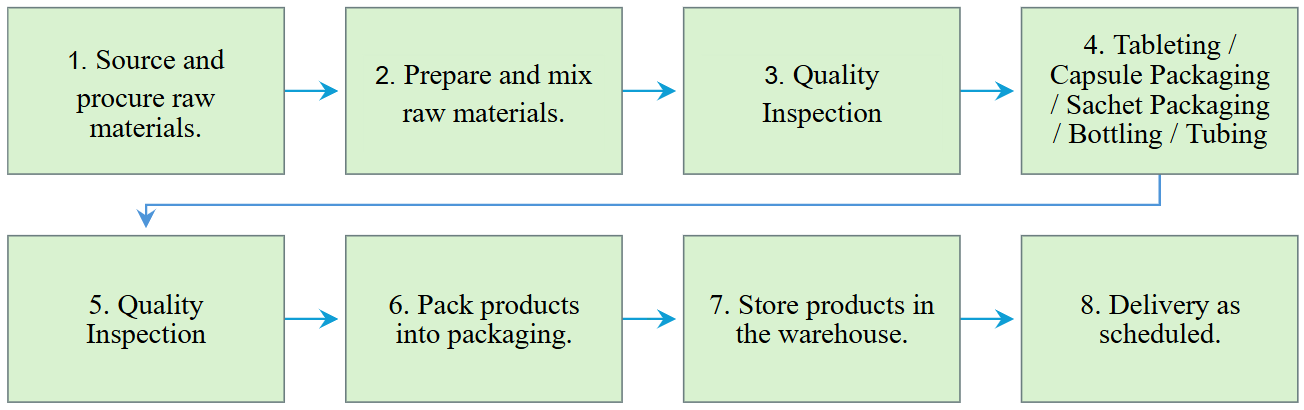
Raw Material Preparation
The production planning and customer service department creates monthly production plans based on the annual sales estimates. Monthly meetings are conducted in collaboration with the sales department.
Blending Raw Materials and Manufacturing
Production Process for Solid Products (Tablets, Capsules and Powders):
The production department will verify the raw material list to ensure it complies with the manufacturing formula before starting the production process. The production process begins with blending raw materials, which can be either wet or dry, depending onthe materials used. After blending, the mixture undergoes fine filtration, followed by drying, re-filtering and blending in a dry mixture. Subsequently, the quality assurance department randomly samples the mixture and sends it to the quality control department for analysis before proceeding with the specific form and strength of the medication, such as tablet compression, encapsulation or sachet filling (powder form). For coated tablets, the quality assurance department checks the weight, disintegration, friability, hardness, and thickness of the tablets before coating. After completing the production, the quality assurance department randomly samples the final product, sends it to the quality control department for analysis and finally, the product is packaged into blister packs according to the specified packaging sizes.
The production process of semi-solid products (creams and gels) and the production process of liquid products (liquid medications):
The production department will verify the raw material list to ensure it complies with the manufacturing formula before starting the production process. The production process begins with blending raw materials. Afterward, the quality assurance department randomly samples the mixture and sends it to the quality control department for analysis before packaging it into the specified packaging sizes.
Inspection of Manufactured Products
The quality assurance department inspects the quality of the product at every stage of the production process, from the blending stage, and intermediate stages during the manufacturing process, to the packaging stage, to ensure that the product meets the quality standards specified in the manufacturing formula.
Delivery of Products
The delivery department staff will prepare finished products for delivery each day. They will check against the daily delivery documents and the set of tax invoice documents according to the product delivery plan. If customers are located in Bangkok, the Company will arrange for product delivery to the delivery department in Bangkok to distribute the products to customers. If customers are in other provinces, the Company will use transportation services from a
logistics Company to handle the delivery of its products. Since 2023, the Company has started using services from a comprehensive health business service provider for transportation services, including tracking and payment collection for customers in government hospitals, private hospitals, and clinics sector, aiming to facilitate product distribution and improve the Company’s operational flexibility.
Raw Material Acquisition (Overall)
Details of Raw Materials Procurement
The main raw materials used in the current pharmaceutical production are Active Pharmaceutical Ingredients (APIs) produced abroad. These are purchased through intermediaries in Thailand. The Company does not rely on any specific intermediary, as its products are widely distributed, utilizing different APIs and having numerous distributors. As for the primary raw materials used in traditional medicine production, they are sourced from the extraction of herbal plants within the country.
Steps in Raw Materials Procurement
The procurement department initiates the purchasing requirements from the material warehouse department, which are purchase requests in the integrated software system. They conduct market surveys from registered suppliers, including new suppliers if they offer better conditions. At least three suppliers are considered for comparison, taking into account specified criteria (being a registered and authorized production source). The evaluation includes delivery schedules, prices, and payment conditions in order of necessity. Once the comparison is approved, the procurement department can then create purchase orders and contracts for authorized signatories to sign. Before sending the purchase orders and contracts to the supplier, the quality control department, in collaboration with the quality assurance department, verifies the accuracy and quality of the products.
Production Policy (Overall)
Note: The production capacity for dietary supplements in sachet powder form is currently operating at 101.5%.
Production Capacity (Overall)
| Item | Unit | Unit (if Other) | Used | Capacity |
|---|---|---|---|---|
| Generic Drug and New Generic Drugs in tablet form | Others | Tablet | 77.3 | 540,000,000 |
| Generic Drug and New Generic Drugs in capsule form | Others | Capsule | 75.9 | 156,000,000 |
| Generic Drug and New Generic Drugs in powder sachet form | Others | Sachets | 96 | 30,000,000 |
| Generic Drug and New Generic Drugs in tube form | Others | Tubes | 88.8 | 14,400,000 |
| Generic Drug and New Generic Drugs in plastic jar form | Others | Plastic Jar | 72.7 | 720,000 |
| Generic Drug and New Generic Drugs in bottle form | Bottle | 78.7 | 3,600,000 | |
| Generic Drug and New Generic Drugs in liquid sachet form | Others | Sachets | 48.5 | 600,000 |
| Herbal Medicine in tube form | Others | Tubes | 93.4 | 4,160,000 |
| Herbal Medicine in bottle form | Bottle | 36.2 | 420,000 | |
| Animal Medicine | Bottle | 17.3 | 144,000 | |
| Cosmetic in tube form. | Others | Tubes | 87.3 | 1,650,000 |
| Cosmetic in bottle form | Bottle | 0.1 | 420,000 | |
| Dietary supplements in tablet form | Others | Tablet | 38.9 | 6,840,000 |
| Dietary Supplements in powder sachet form | Others | Sachets | 100 | 2,160,000 |
Domestic/Overseas Purchase Proportion (Overall)
| Raw Material | Source Country | Value |
|---|---|---|
| Acyclovir (Micronized) | China | 9,044,355.28 |
| Plai oil | Thailand | 64,297,000 |
Nature of Business — Overview
Introduction
Manufacture and distribute various pharmaceutical products, including generic drugs and new generic drugs, herbal medicine products, medicine for livestock, cosmetics, nutritional supplements, medical devices and others. The distribution is conducted through business-to-business (B2B) transactions with customers such as pharmacies, both public and private hospitals, private companies, retail stores, and through modern trade channels, including hypermarkets and convenience stores. The products are distributed both domestically and internationally, and direct business sales to consumers (B2C) are also carried out through online channels.
Product Information — Overview
Introduction
The Group manufactures and distributes various pharmaceutical products, including generic drugs and new generic drugs, herbal medicine products, animal products, cosmetics, nutritional supplements, medical devices and others. The distribution is conducted through business-to-business (B2B) transactions with customers such as pharmacies, both public and private hospitals, private companies, retail stores, and through modern trade channels, including hypermarkets and convenience stores. The products are distributed both domestically and internationally, and direct business sales to consumers (B2C) are also carried out through online channels. The Group’s products can be classified into two main groups: Pharmaceuticals and Other Health-Related Products.
Projects Under Construction
Has Projects Under Construction (Y/N)
No
Debentures & Bills of Exchange
Has Debentures (Y/N)
No
Convertible Securities
Has Convertible Securities (Y/N)
No